Specialized travel planning for medical care, birth abroad, and professional journeys—so you travel stress-free and arrive confident.
Dec 25, 2025
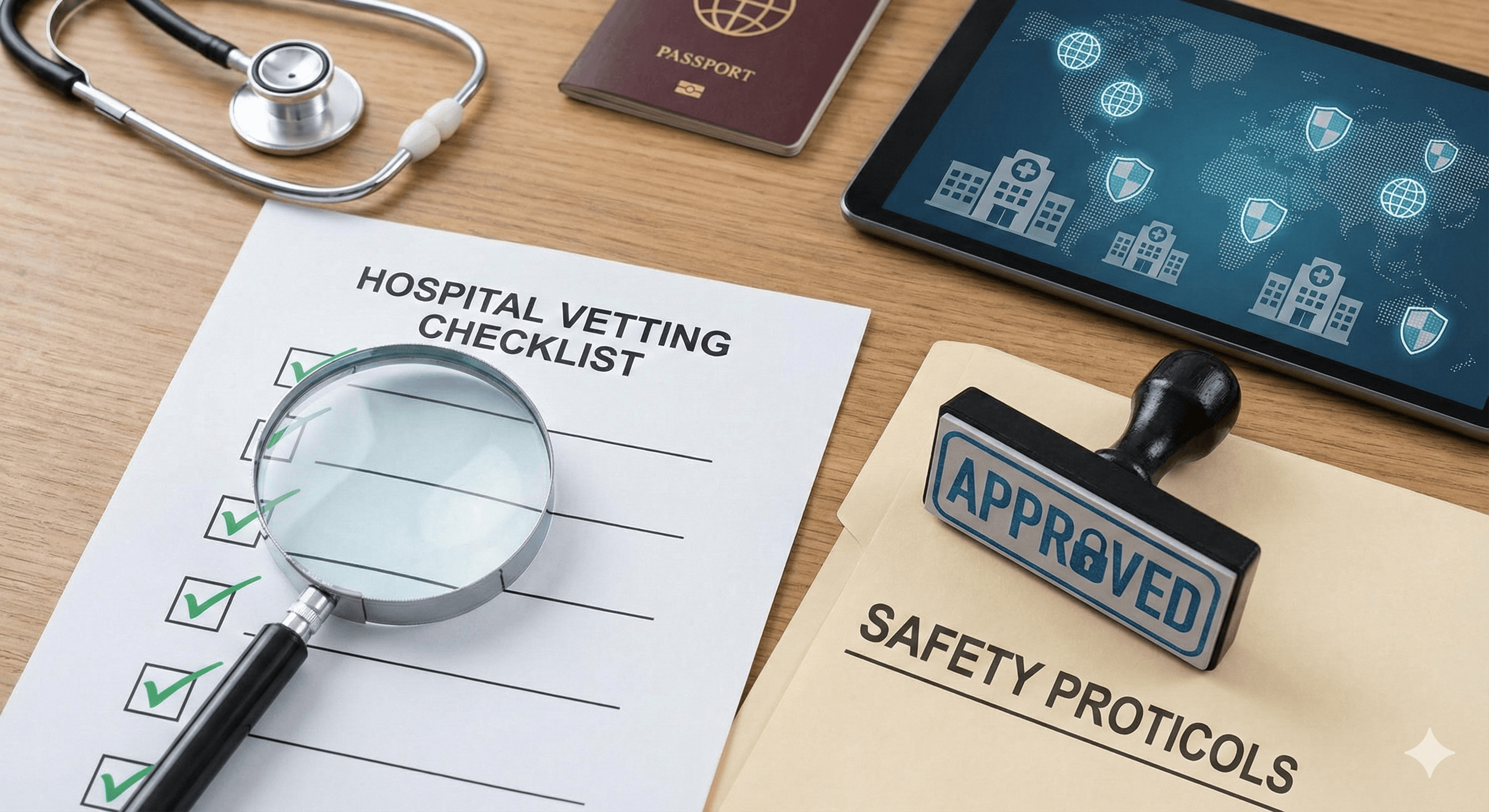
Introduction
Making the decision to travel abroad for medical treatment is significant. While the potential for cost savings and access to specialized care is appealing, it is natural for one overwhelming question to dominate your thoughts: Is it safe?
At Niiboni, we understand that anxiety. We believe that geography should never compromise quality. Our entire business model is built not just on connecting patients with doctors, but on acting as your safety firewall. We don't just "list" hospitals; we rigorously audit them.
We reject more partnerships than we accept. Why? Because if we wouldn't send our own mothers or children there, we won't send you.
Here is an inside look at our comprehensive vetting process—the engine that powers your peace of mind.
Phase 1: The Non-Negotiable Baseline (International Accreditation)
Before we even pick up the phone to speak with a hospital administration, they must pass our initial screening for internationally recognized accreditation. This is the bedrock of safety.
We primarily look for the "Gold Standard": JCI (Joint Commission International) accreditation.
What it is: JCI is the international arm of the body that accredits US hospitals. It is widely considered the toughest, most comprehensive evaluation in global healthcare.
What it means for you: A JCI hospital has met over 1,000 measurable elements regarding patient safety, medication management, infection control, and surgical protocols. It isn't a one-time certificate; they are re-inspected regularly.
While JCI is our benchmark, we also recognize other top-tier accreditations, such as ISO standards for medical devices and specific national accreditations in countries with high regulatory standards (e.g., Australia, Singapore, Germany).
If a hospital doesn't have top-tier accreditation, the vetting process stops here. Period.
Phase 2: The Clinical Deep Dive
A fancy building with a plaque on the wall isn't enough. Healthcare is delivered by people. Once the facility passes baseline accreditation, we investigate the medical teams.
1. Surgeon and Physician Credentials:
We verify that key specialists are not only board-certified in their home country but often hold fellowships or memberships in Western medical associations (e.g., the American College of Surgeons, the Royal College of Physicians in the UK). We look for doctors who regularly attend international conferences to stay on the cutting edge of their field.
2. Procedure Volume and Specialization:
Practice makes perfect in surgery. We don't want a generalist doing your complex cardiac procedure. We analyze data on procedure volumes. We want partners who perform your specific surgery hundreds of times a year, not just occasionally. High volume generally correlates to better outcomes and lower complication rates.
3. The Support Team:
A great surgeon needs a great team. We review the qualifications of the anesthesiologists, specialized nursing staff, and rehabilitation therapists.
Phase 3: Infrastructure, Technology, and Protocols
In this phase, we look at the "hardware" of the hospital and the rules they follow.
1. Infection Control Protocols:
This is paramount. We require evidence of rigorous sterilization processes that meet or exceed WHO (World Health Organization) guidelines. We inquire about their historical rates of hospital-acquired infections like MRSA.
2. Technology and ICU Capacity:
Does the hospital have modern diagnostic imaging (CT, MRI, PET scans)? Crucially, do they have a fully equipped, modern Intensive Care Unit (ICU) staffed 24/7 by intensivists? While complications are rare, we only partner with facilities capable of handling emergencies in-house without needing to transfer you elsewhere.
3. Blood Bank and Medication Safety:
We ensure the hospital has secure, screened on-site blood banking and robust protocols to prevent medication errors (such as barcoded administration systems).
Phase 4: The "Soft" Metrics (The Patient Experience)
Safety isn't just clinical; it’s also about communication and comfort. A stressful environment impedes recovery.
Language Barriers: We only partner with hospitals that have dedicated international patient departments with fluent English-speaking coordinators and medical staff. You must be able to communicate clearly with your doctor.
Cultural Competence: Is the staff accustomed to treating Western patients? Do they understand different dietary needs and privacy expectations?
Transparency: Is the hospital forthcoming with their pricing, their success rates for specific procedures, and their policies on revision surgery if something doesn't go as planned?
Phase 5: The "Boots on the Ground" Audit
This is what truly separates [Your Company Name] from a directory website. We don't just trust paperwork.
Before finalizing a partnership, members of our senior team visit the facility in person. We walk the hallways, inspect the patient rooms for cleanliness, eat the hospital food, and talk to the nurses at the stations. We assess the "vibe"—is it chaotic, or is it calm, organized, and professional?
There are things you cannot smell, see, or feel through a Zoom presentation. We go there so we know exactly what you will experience when you arrive.
Conclusion: Constant Vigilance
Our vetting process never truly ends. We continuously monitor our partner hospitals through:
Collecting detailed post-procedure feedback from every single one of our patients.
Tracking any reports of complications.
Requiring updated proof of re-accreditation.
If a hospital’s standards slip, they are removed from our network.
Your safety is not a checkbox for us; it is our entire professional obligation. When you travel with us, you are traveling with the confidence that the hard questions have already been asked and answered.
Every journey is different. If something's not clear, or you just want to talk it through with someone who gets it. Reach out. We're real people, and we're happy to help.
Send us a mail
Schedule a call